
|
 |
 |
 |
 |
 |
 |
 |
 |
SmartWORKS™ DP |
T1/E1 Passive TAP Card |
||||||||||||||||||||||||||||||||||
 |
|||||||||||||||||||||||||||||||||||
|
 |
SmartWORKS™ DP Series |
 |
||||||||||||||||||||||||||||||||
|
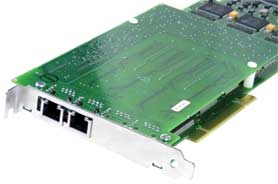
The SmartWORKS™ DP... |
|||||||||||||||||||||||||||||||||||
High Density Passive Tap Capabilities Operating between a central office and PBX, the SmartWORKS™ DP’s high impedance receivers records both sides of a call without interrupting service. Each board can process up to 60 channels, with a maximum of 512 channels per host. Service is never interrupted even if the SmartWORKS™ DP-equipped PC is shut down. International Protocol Support The SmartWORKS™ DP supports Channel Associated Signaling (CAS), Non-Facility Associated Signaling (NFAS) , DASS2 and any Q.931 based ISDN variant. Trunk coding and framing is selected on a per framer basis. This allows a single board to monitor two trunks, each with different settings. Built in Performance Monitoring Network conditions and call statistics are easily accessed via the SmartWORKS™ API. Event driven alarms are reported for loss of signal conditions or synchronization errors. Framer and call statistics are available through standard API function calls. Software Switchable T1/E1 Interface Supports T1 and E1 using the same board. Automatically configures for all supported ISDN variants. ISDN Call State Monitoring Interprets the ISDN signaling protocol and reports the call states and call parameters via comprehensible API events. True Dual Span Capabilities A single RJ-45 interface is capable of recording both sides of a conversation, which maximizes the usefulness of each individual port. On-board DSP to Complete Voice Processing Robust call recording features combined with ISDN call control, eliminates the need for other resources on the system. CODEC Support SmartWORKS™ call recording products offer a large selection of voice CODECS.(including G.723.1, G.729A and MS GSM) |
|||||||||||||||||||||||||||||||||||
 |
Applications DP boards are connected between the customer premise equipment (CPE) and the PTSN providing passive monitoring of voice conversation and call control information. Click to see an image |
||||||||||||||||||||||||||||||||||
| PRODUCT SPECS | |||||||||||||||||||||||||||||||||||
|
|||||||||||||||||||||||||||||||||||
|
|
|||||||||||||||||||||||||||||||||||
















