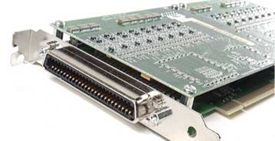
HARDWARE SYSTEM REQUIREMENTS
Pentium 4 or equivalent · 2 GHz or better
PCI motherboard or passive backplane with 3.3V power supply,
PCI2.2/PCI3.0/PCI-X/PCI-E bus
|
Analog Jack
Audio Connector: 3-pin 0.1” ctr header
Output impedance: 300Ohms
Input impedance: 33KOhms
Return loss: >25dB
Mic bias: +5VDC @ 4.7KOhms
Input gain: +9dB
Output gain: 2.6dBm @ 300Ohms
Full scale input: 370 mVRMS
Full scale output: 1.5 VRMS open circuit |
|
Operating Systems
Windows2000 Professional/Server, WindowsXP Professional (SP3),
Windows2003 server (32-bit/64-bit), Windows2008 server
(32-bit/64-bit), Widnows7 (32-bit/64-bit), Windows8 server (Call for variant details)
|
PBX Interface
PBX Support: Software Configurable
see www.ai-logix.com.cn for a complete list |
Environmental Conditions
Operating Temperature: 0C to +60C
Storage Temperature: -20C to +85C
Humidity: 8% to 80% non-condensing
Storage humidity: 8% to 80% non-condensing
Physical Characteristics
Form Factor: Full-size PCI card |
Audio Signal
Receive range: -68 dBm to + 3 dBm
Input gain control: +24 to -50 dB
Silence Detection: Programmable from API
Transmit volume control: +24 to -50 dB to
MVIP/H.100
Automatic Gain Control (AGC): Programmable
from API
Automatic Volume Control (AVC): Programmable
from API
Activity Detection: Programmable from API
Frequency Response: 300 - 3400 Hz (+/- 3dB) |
Tap Interface
Insertion loss: <1dB
Isolation: Galvanic 500VDC +/-10%,
100VRMS
1 sec
Impedance: Soft-Switchable 1KOhms/100Ohms
External connector: RJ-21X 25 Pair female
SDK
Ai-Logix Native SmartWORKS™ API
SmartControl (Control Panel)
SmartVIEW (Card functionality test application)
Host Interface
Bus Compatibility: PCISIG 2.2/PCI-X/
PCI-E1.1/x1,x4, x8, x16 and
Gen 2.0 PCI Express slots
Bus Speed: 33 MHz
Bus Mode: 32 bit bus master/target |
Audio Digitizing (Encoding &
Decoding)
5.3 Kb/s G.723.1
6.3 Kb/s G.723.1
8 Kb/s: G.729A
13 Kb/s: GSM 6.10, Microsoft GSM
16 Kb/s: G.726
24 Kb/s: G.726, OKI
32 Kb/s: G.726, OKI
40 Kb/s: G.726
64 Kb/s: µ-law or A-law per G.711,
8 bit linear PCM (signed & unsigned)
96 Kb/s 6 Khz 16 bit linear PCM(signed)
128 Kb/s: 16 bit linear PCM (signed & unsigned)
Wave file formats: Microsoft GSM,
Linear signed
8 & 16-bit PCM
Digitization selection: Programmable per
channel, independent for encode and decode |
DTMF Tone Detection
DTMF digits: 0 - 9, *, #, A, B, C, D
Dynamic range: -38 dBm to 0 dBm
Minimum tone detection: 40 ms /programmable
Interdigit timing: 40 ms min.
Acceptable twist: Per LSSGR sec. 6, 8 dB
forward,
4 dB reverse
Frequency variation: Accept all +/- 1.5%,
reject all +/-2.5%
Noise tolerance: Per LSSGR sec. 6
Talk off: Bellcore TR-TSY-000762
|
Safety and Certifications
Telecom: DOC
Emissions: FCC Part 15 class A · EN 55022
Immunity: EN 55024
Safety: EN 60950
Estimated MTBF: 250,000 hours per Bellcore
Method I |
PORTS
NGX800/NGX800-eh 8 ports
NGX1600/NGX1600-eh 16 ports
NGX2400/NGX2400-eh 24 ports
MX80/MX80A 8 ports daughter card
* -eh denotes PCI-E slot card |
POWER REQUIREMENTS
NGX (PCI 2.2 base):
+ 3.3 VDC: 0.9 A
+5 V DC: 1.5 mA
-12 V DC: 25 mA
+12 V DC: 25 mA
NGX (PCI 2.2 24
channel): + 3.3 V
DC: 1.6 A
+5 V DC: 1.5 mA
-12 V DC: 35 mA
+12 V DC: 35 mA
NGX (PCI express base):
+ 3.3 V
DC: 1.3 A
NGX (PCI express 24 channel):
+ 3.3 V
DC: 2.0 A |
|
Part number |
|
|
910-0314-001 |
NGX800 |
|
910-0314-002 |
NGX1600 |
|
910-0314-003 |
NGX2400 |
|
910-0315-001 |
MX80 (Expansion)
|
|
910-0700-001 |
NGX800-eh
|
|
910-0700-002 |
NGX1600-eh
|
|
910-0700-003 |
NGX2400-eh
|
|
910-1315-001 |
MX80A (Expansion) |
|
|
PBX MODELS SUPPORTED
Alcatel, Avaya, Bosch, Cisco, eON, Ericsson, Fujitsu, Harris, LG,
Mitel, Nakayo, NEC, Nortel, Panasonic, Philips, Rockwell, Samsung,
Siemens, Tadiran, Telrad, Toshiba, etc.
Confirm with our sales person
for more details on the exact model number and phone set type
supported. |
|